Resolving Dual-Extraction Disagreements: A Field-Level Adjudication Ladder
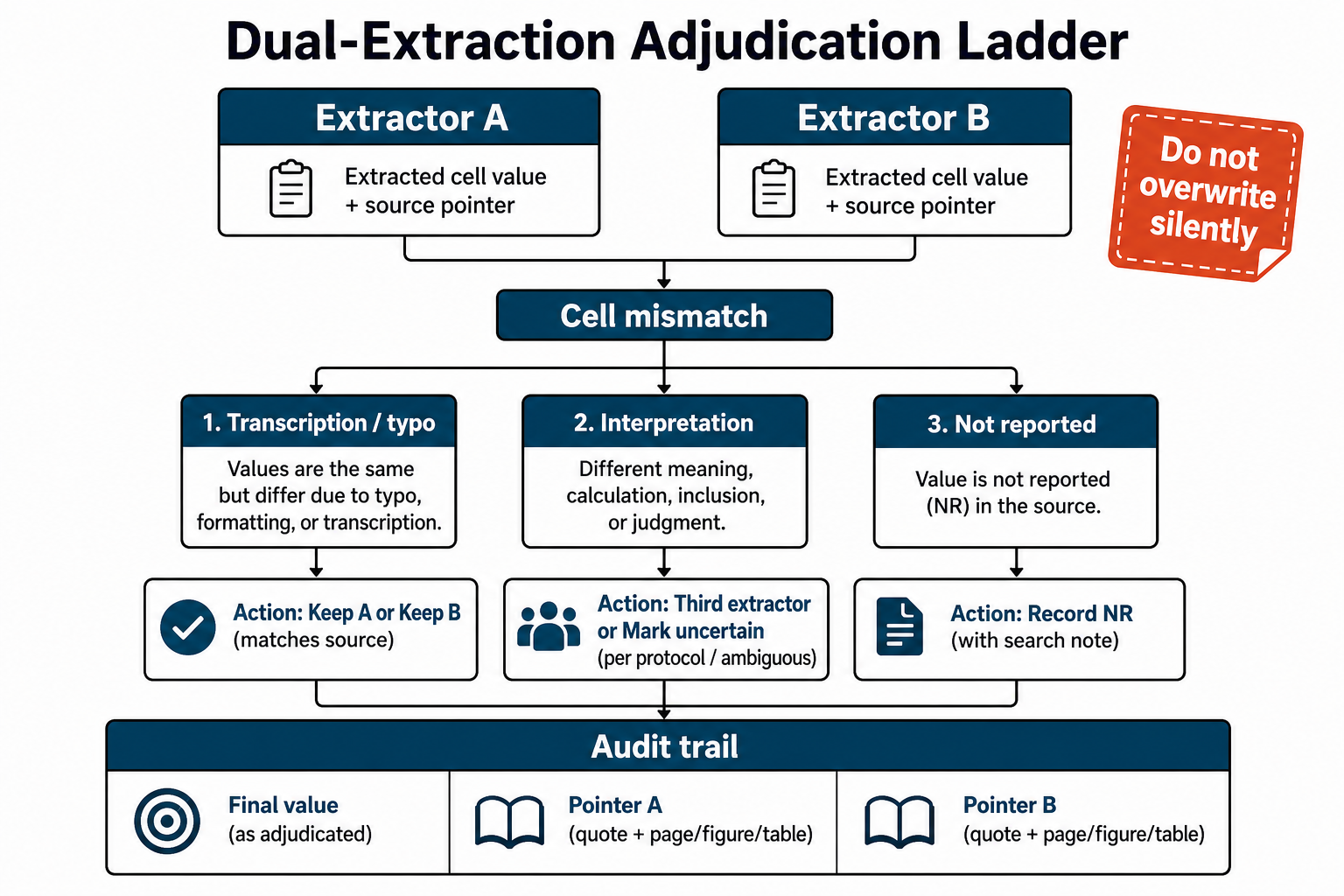
A concise, source-linked ladder for resolving cell-by-cell disagreements between two human extractors — with explicit decision rules and audit trail requirements.
Latest articles, tutorials, and updates about evidence tables and systematic reviews.

A concise, source-linked ladder for resolving cell-by-cell disagreements between two human extractors — with explicit decision rules and audit trail requirements.

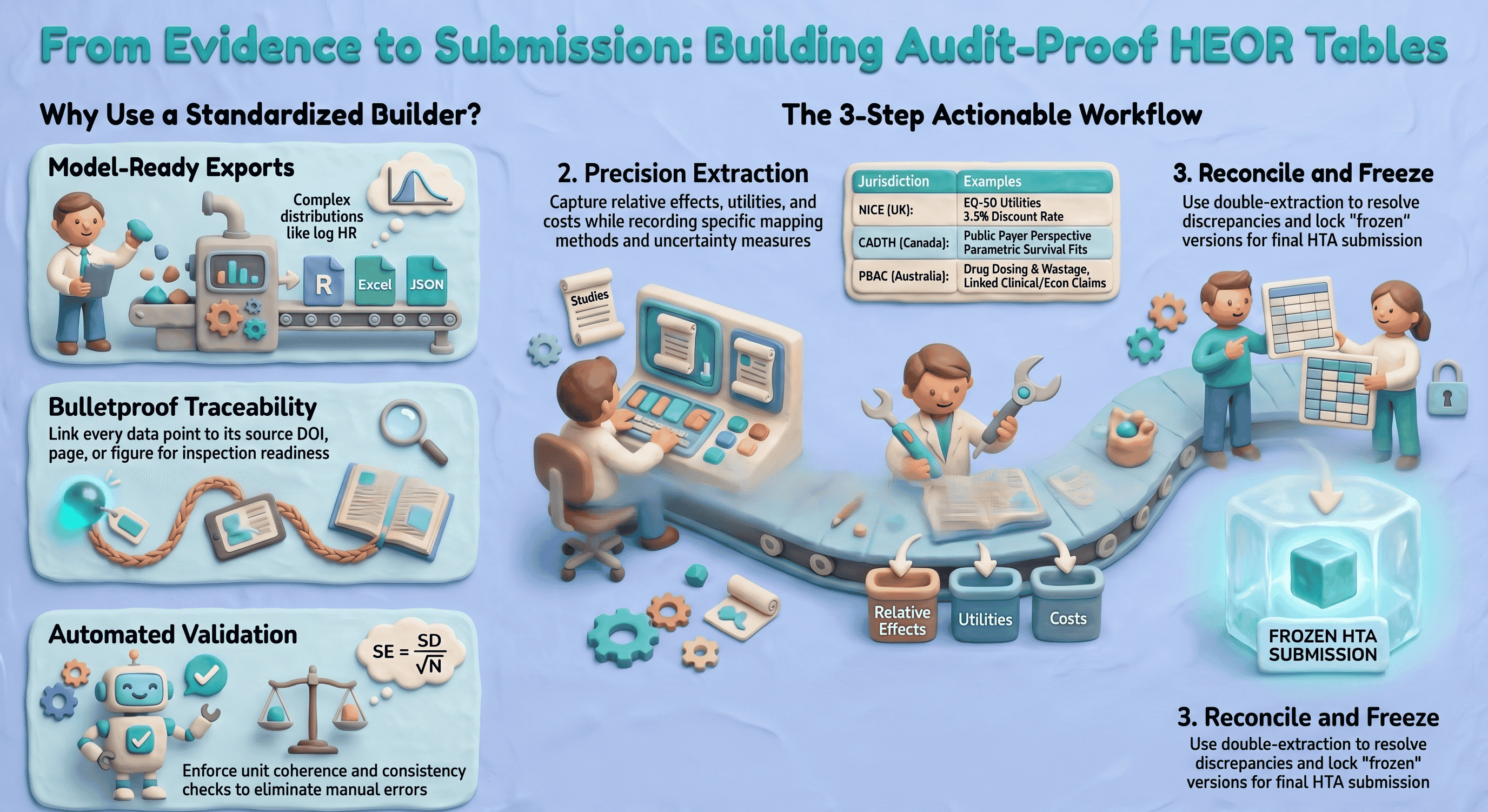
Model-ready means each value has a field, unit, timepoint and source. Audit-proof means a dossier number traces to the page and the reviewer.

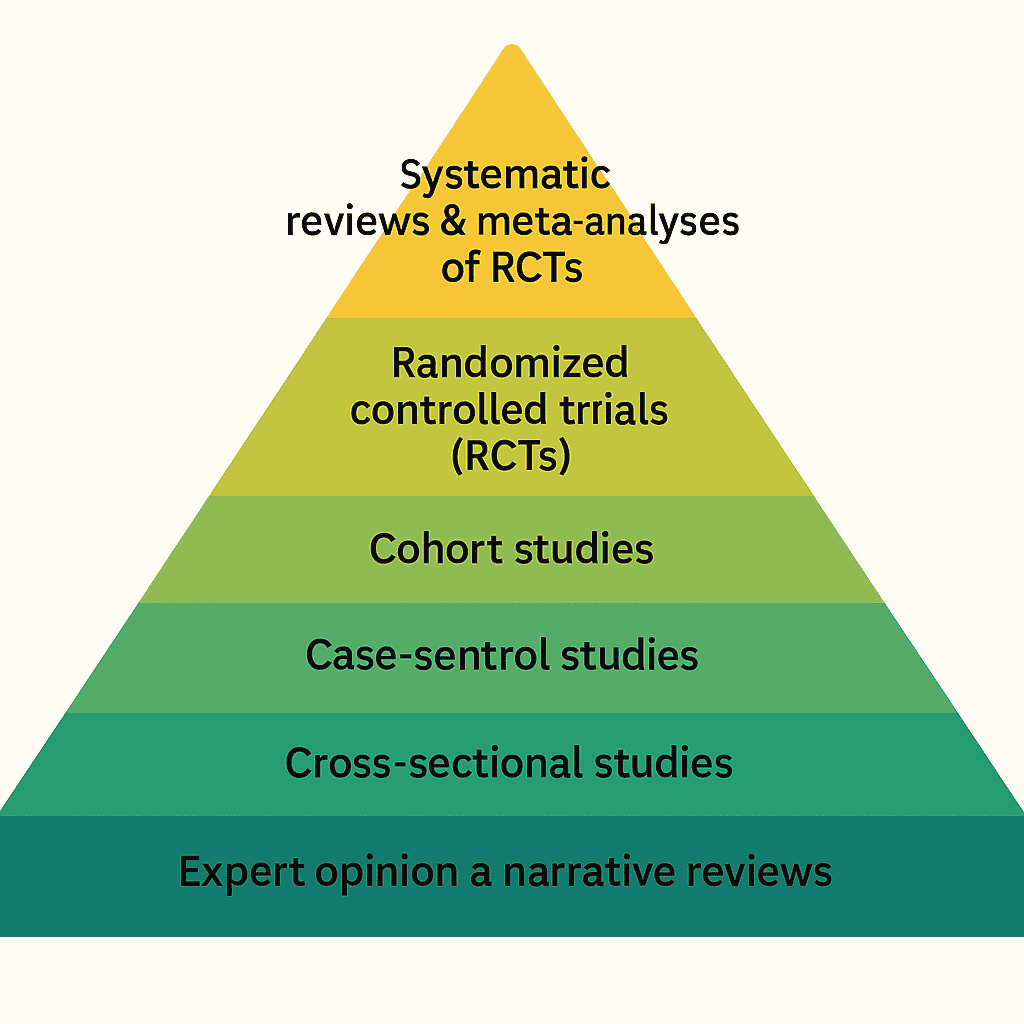
What the levels of evidence pyramid means in systematic reviews — plain diagram language plus a worked example level.

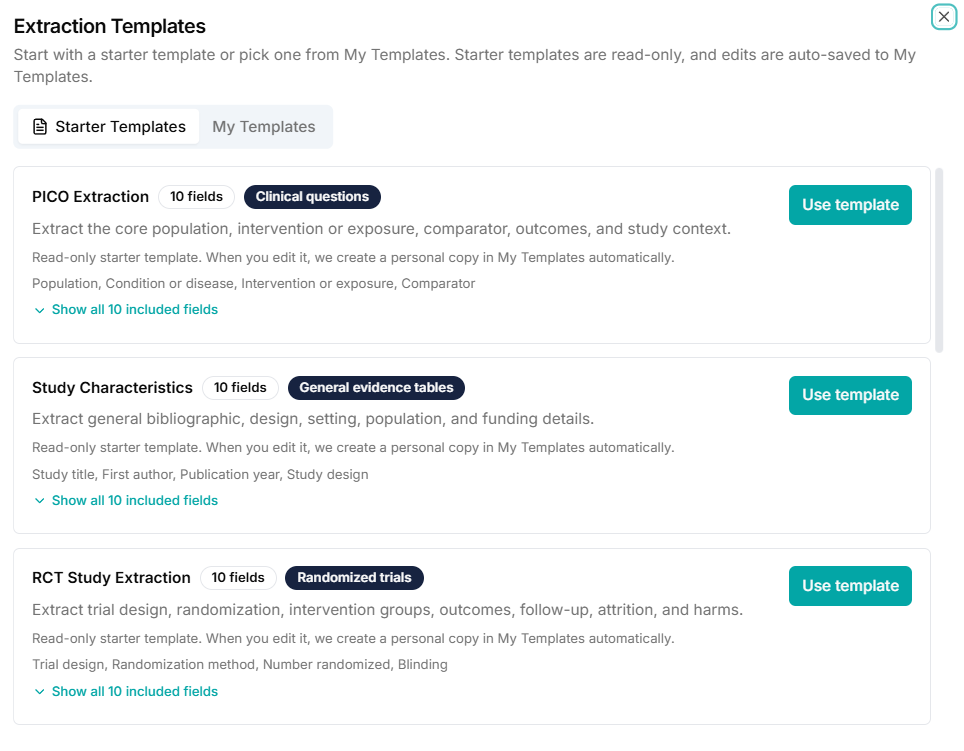
Extraction Templates in Builder let you start faster, reuse proven question sets, autosave custom setups, and keep extraction workflows consistent across projects.
A tour of the Quality Assessment workspace: AI-assisted, evidence-linked drafts for RoB 2, ROBINS-I, NOS, ROBIS, AMSTAR 2, NHLBI checklists, and CORE, plus the roadmap of appraisal profiles on the way.

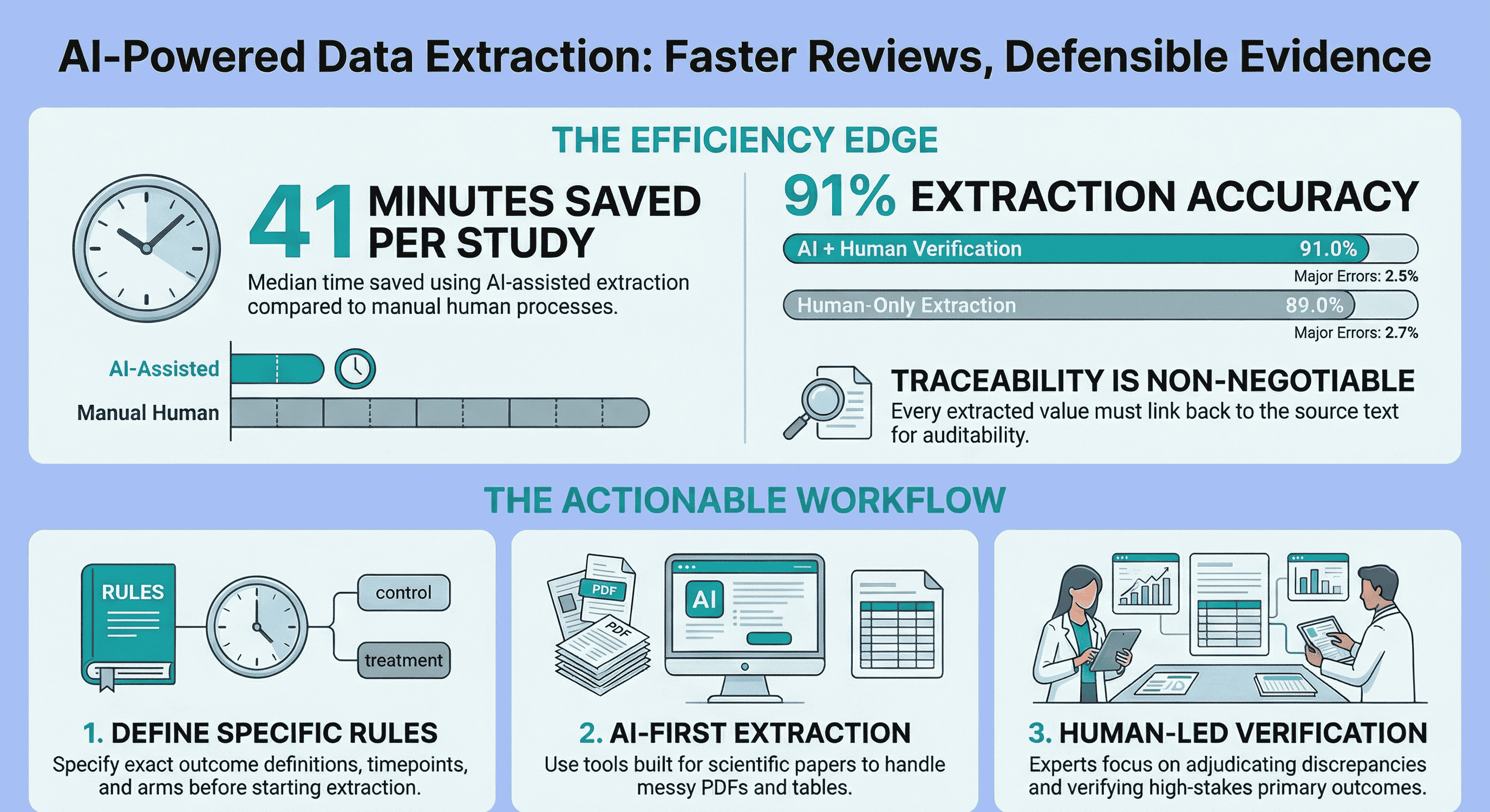
A practical HEOR framework for using AI as the second extractor: where it works, where it fails, and how to keep outputs audit-ready.

Quality frameworks are methodologically strong, but reviewer hesitation persists. The missing layer is decision support under real workflow pressure.

Outcomes are a synthesis choice: comparable measures for quantitative reviews, coherent concepts for qualitative ones.

A practical SOP for using EvidenceTableBuilder inside a real systematic literature review workflow, from schema lock to QA sign-off.

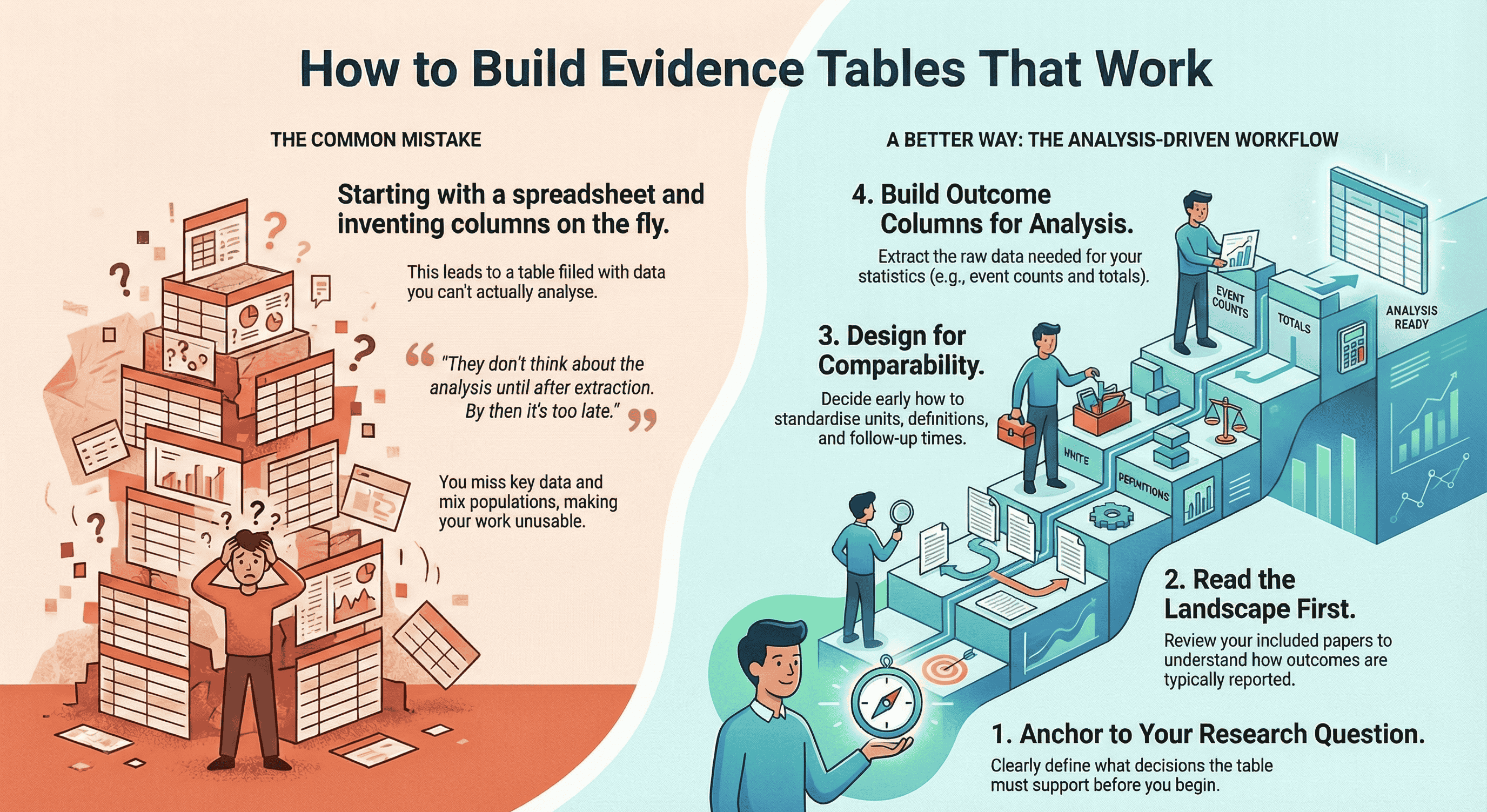
A practical evidence table template with column groups, required fields, and design rules to prevent extraction rework.

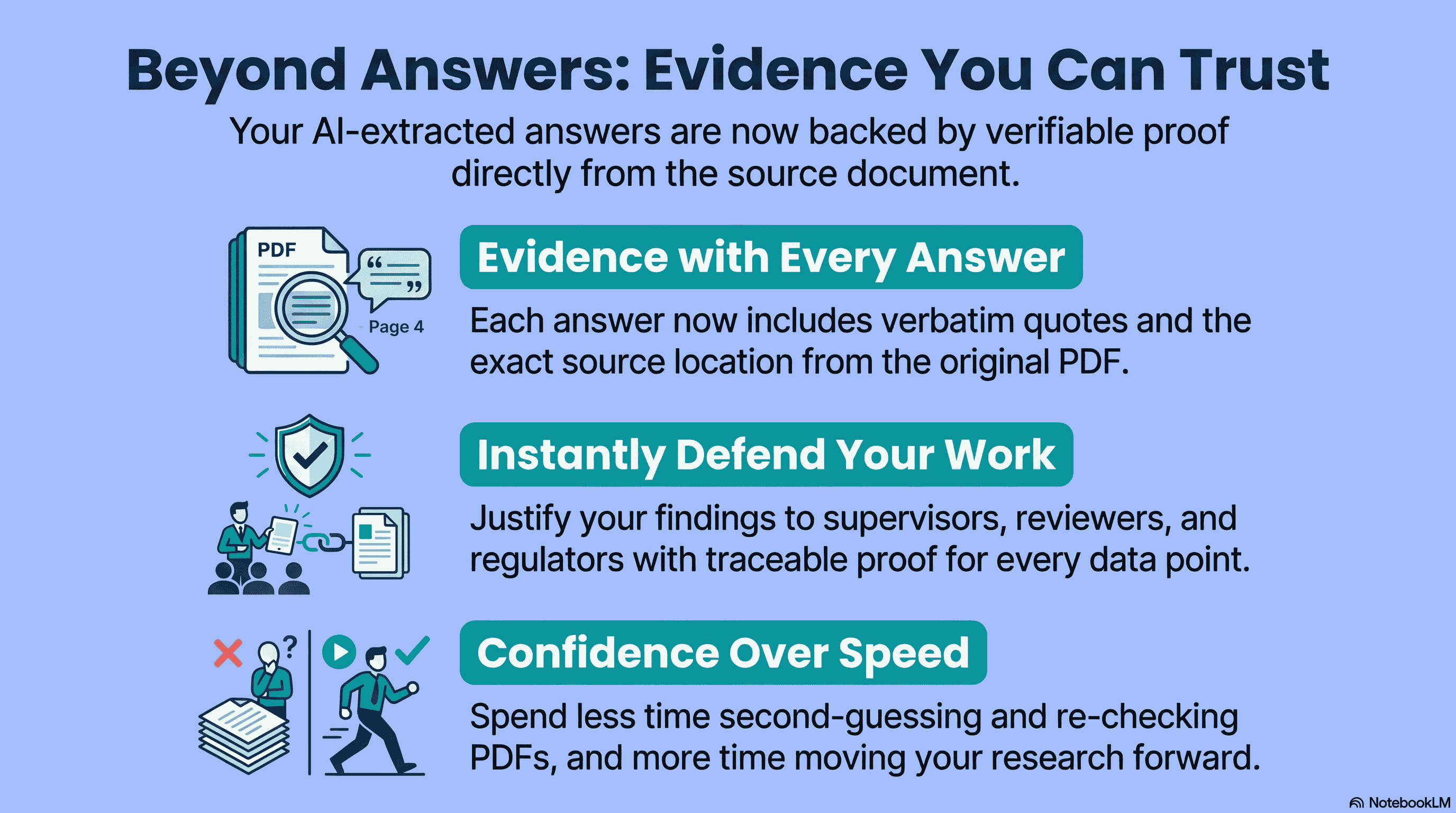
The new Audit Trail feature was the most requested update — and it's finally here. Every extracted answer is now backed by verbatim quotes from the source PDF, with clear pointers to where that information came from.

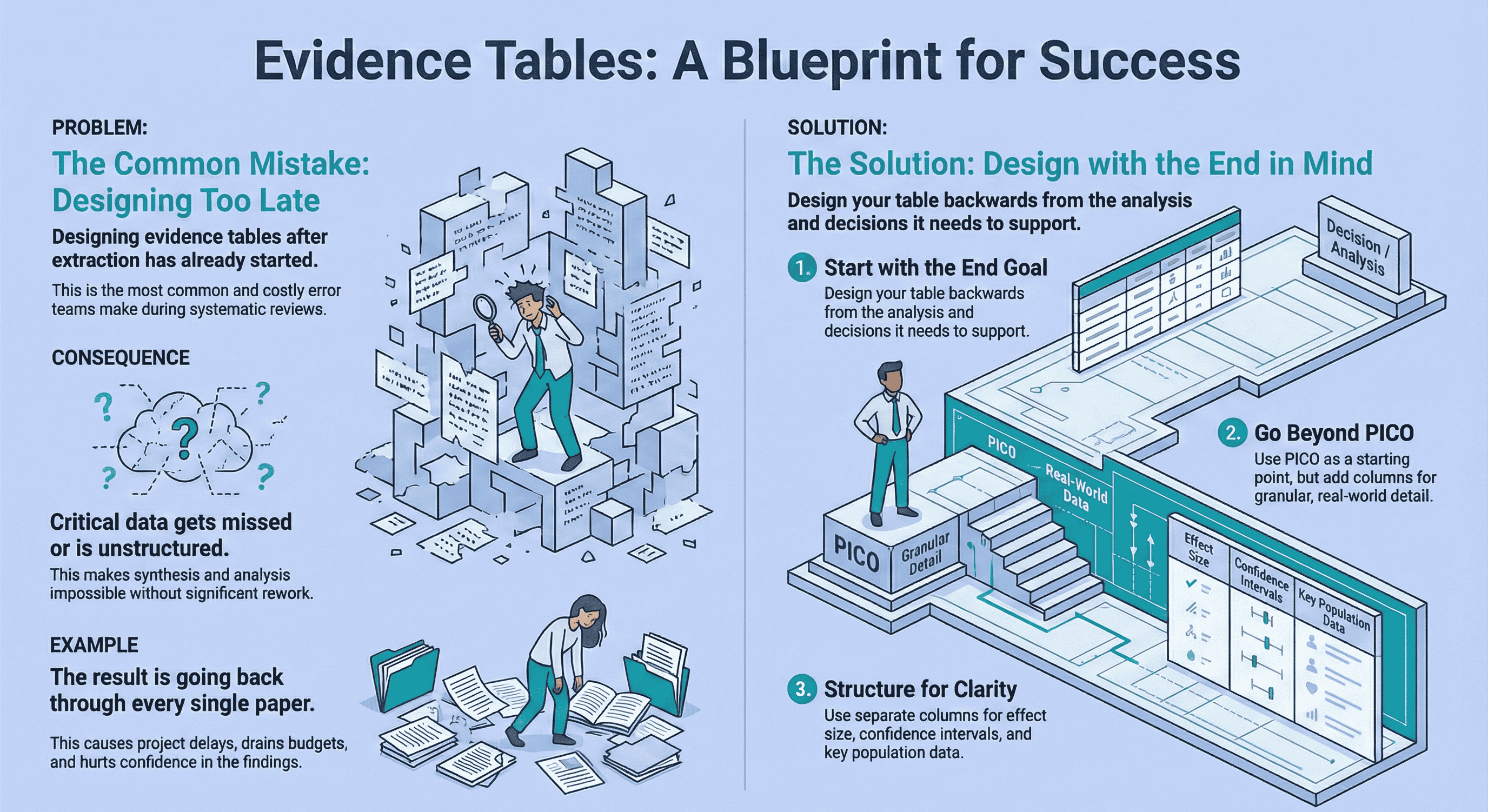
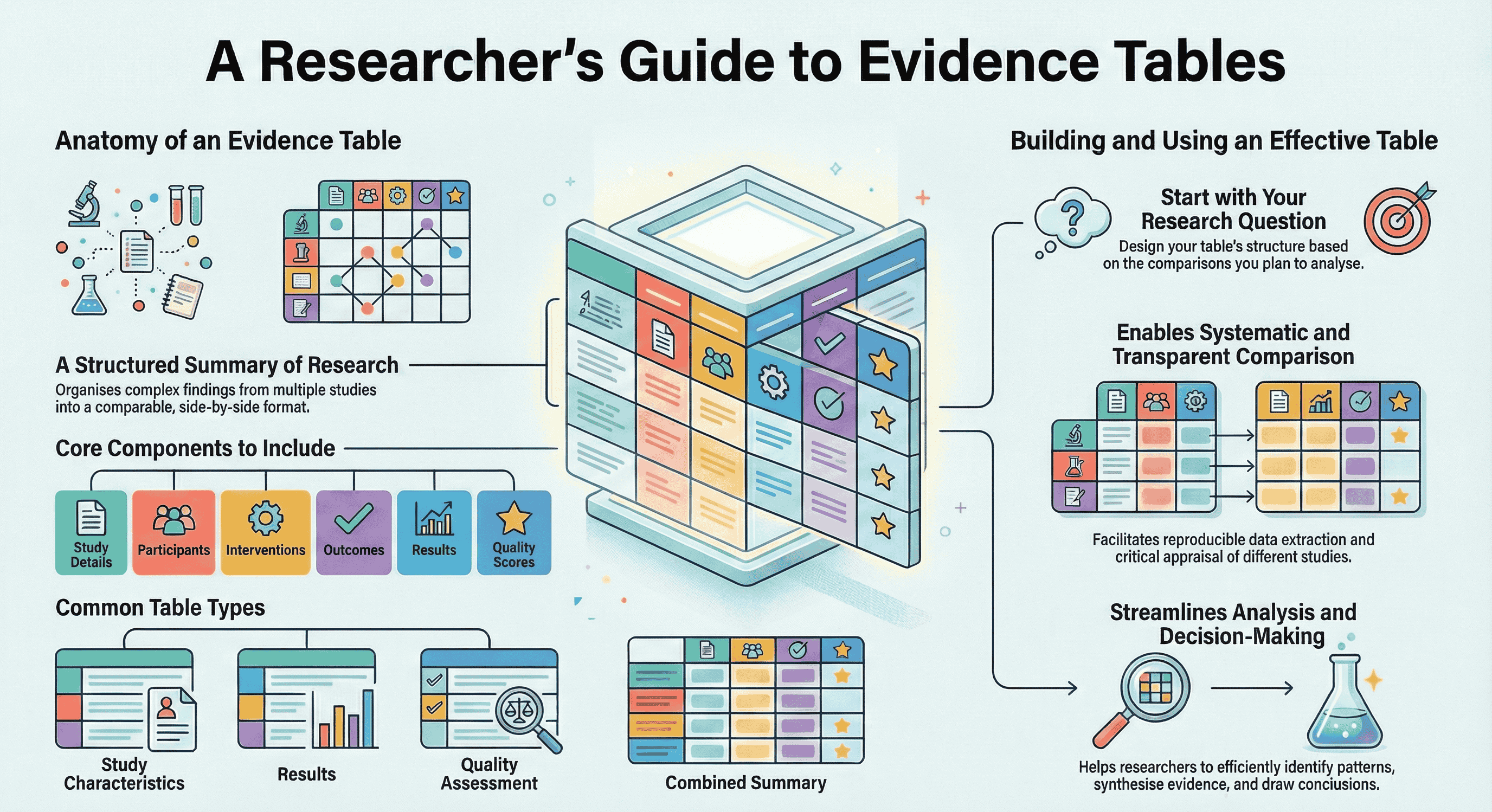
A good evidence table isn’t "a big spreadsheet of everything you see in the papers" – it’s a table designed backwards from your research question and planned analysis.

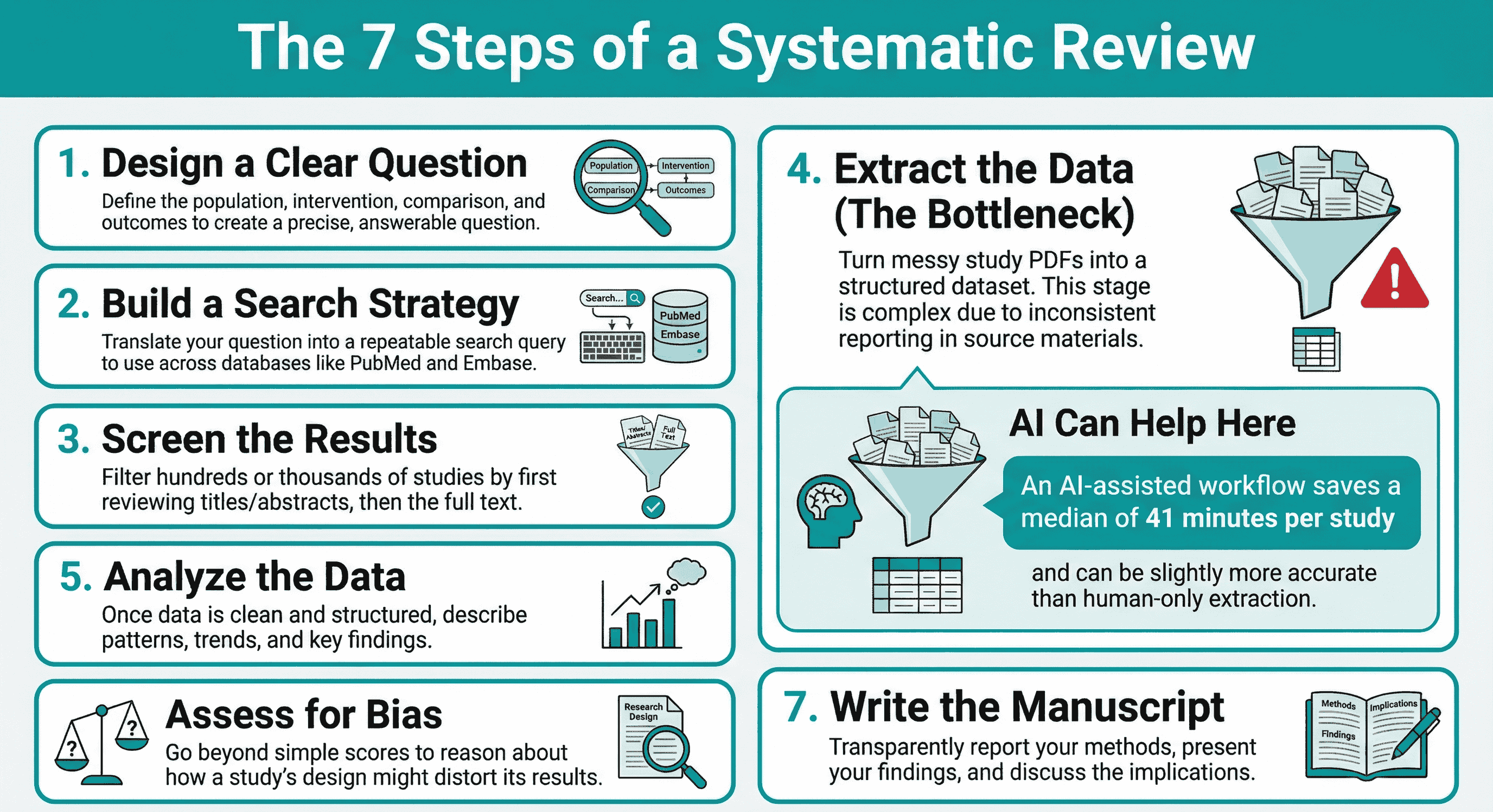
A beginner-friendly walkthrough of the 7 systematic review steps, with practical checkpoints and handoff criteria for each stage.

An evidence table puts each study in one row: design, PICO, outcomes, results, risk of bias. See a worked example and copy a free template.

A focused forecast of where AI in systematic reviews is heading: from assisted tasks to governed, continuously updated evidence workflows.
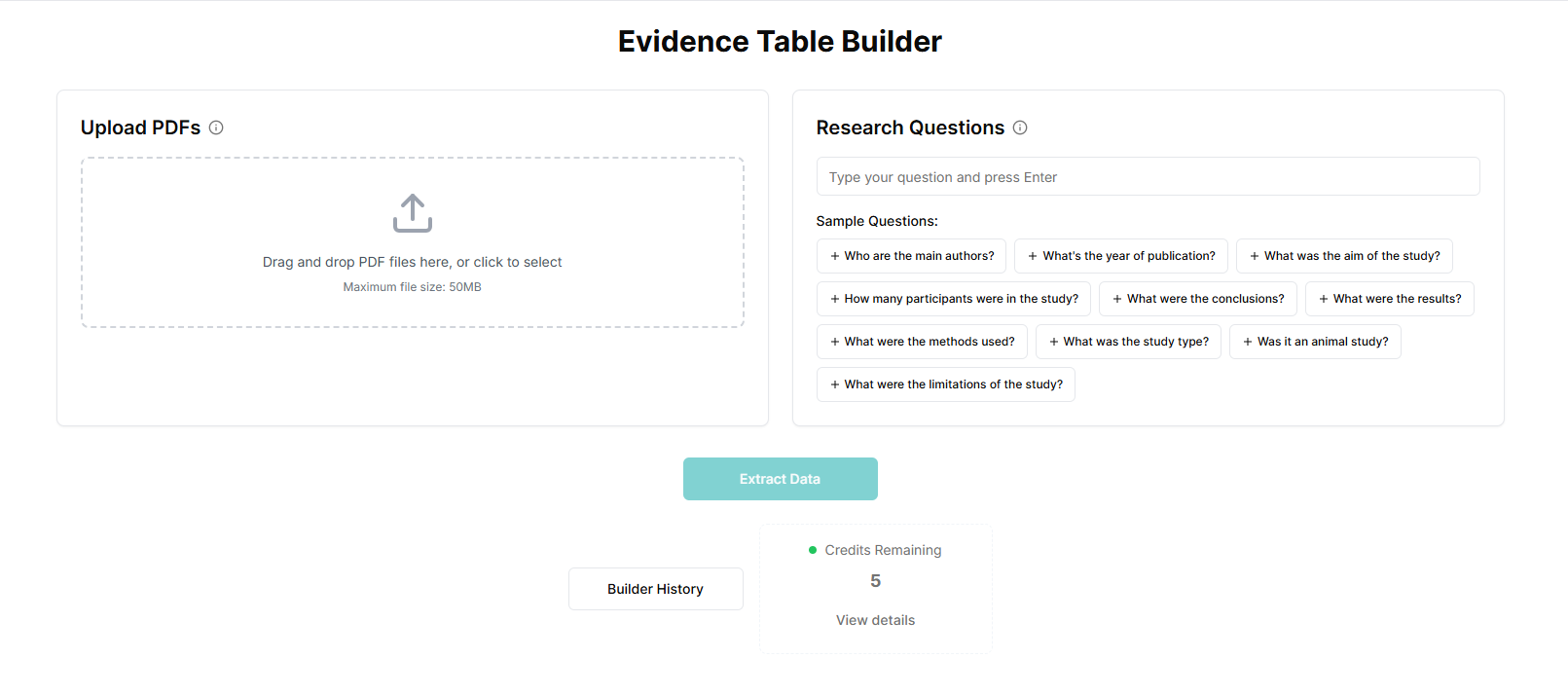
Learn how to prepare your files, upload PDFs, ask effective questions, and extract structured data from research papers in minutes.
Learn how to select a quality review tool for appraising studies. Criteria, examples, and checklists for cross-sectional, cohort, case-control, and DTA.
Learn how to plan, structure, and extract the right variables for high-impact evidence tables in your next systematic review.
Build reliable evidence tables by planning, piloting, and quality checking every step of your data extraction workflow.
Avoid the five pitfalls that derail systematic reviews—from vague questions to weak syntheses—and upgrade your methodology.